Another solstice and i'm reminded more than ever that i don't have any time to waste. I feel there's still work for me to do before i shuffle off this mortal coil. I had thought my contribution was to organize the world's wisdom but it seems Intelligence has other ideas and has hit on me, innumerate candidate that i am, to bring a new economic theory to light. It struck me as ironic but, as the theory took shape, i realized that conventional economic minds, steeped in the dismal science, would be the last to admit the possibility, much less grasp the import, of an alternative system. They are doctrinally
blinkered with what i call moneytheism and brook the existence of no other gods.
In the beginner's mind there are many possibilities; in the expert's mind there are few.
~ Shunryu Suzuki ~
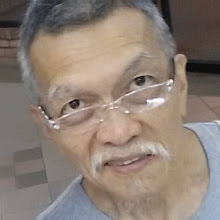
My unlikely qualifications include being born under the counter of a chaini shap; seen imperialist extraction and wealth appropriation first hand; witnessed and endured class, race and colour prejudice; been an entrepreneur, artist/designer, social deviant and intuitive empath; combined with a boddhisattvic compassion, all contrived to prepare me to question deeply the current status quo as the Occupy protesters are doing. I had at first only vague intimations that would coalesce into a coherent system. I daresay not many others, certainly not economists, can claim a similar hodgepodge of experience. That seeming diffusion resulted in a generalist overview with a holistic grasp of systems. Life prepares you for itself. You just have to be ready to see the opening door.
Like everyone else not part of the 1%, i was faced with diminishing financial prospects, qualifying me for food stamps, Medicaid and a free monthly cell phone service, without a single dollar coming to
me. This basic life support allowed me to work in the community and on creative projects, work that is not readily counted in GDP or that attracts remuneration. Granted my needs are minimal but could this safety net not be extended universally and distributed digitally? There are enough resources to go around if some don't get too greedy.
I became aware of the the work of Jacque Fresco and The Venus Project proposing, with the help of The Zeitgeist Movement,
a Resource Based Economy where all the world's resources are owned in
common and managed rationally. It is a single system after all.
Everyone would share access to these resources without the need for
money. Considering the ongoing financial crisis which seems to
have no end, every day bringing new problems resulting from the last
round of adjustments, precipitating further tweaks in a downward
spiral, money seemed to be the central problem, so why not do away with
it? Money is after all only a symbol of wealth, a means of
exchange. Somewhere along the line, we have mistaken it for wealth
itself, even trading it as a commodity. Systemic change is needed
and not structural adjustments as proposed by conventional economists.
My concerns with all the moneyless proposals i came across was a
conspicuous absence of a means to control distribution. As
evolved as we'd like to think that human beings are, fear and the greed
that it engenders are part of our survival responses. I
have seen near riots when rice was rationed in our shop in the 1970s,
and the behavior of Black Friday crowds is evidence that the
instinct has not been restrained by conscious evolution. It is very
difficult to overrule the reptilian brain.
We have the power to defy the selfish genes of our birth and, if necessary, the selfish memes of our indoctrination.
~ Richard Dawkins, The Selfish Gene, 1976
Without the incentive of profit, would creators and producers continue to innovate and produce? These two concerns led me to consider an index similar to GDP but greatly expanded. This index i call Net Planetary Value
would be calulated by algorithm using three types of criteria — ethical, social and
environmental — over time — past, present and future. Each individual,
company, product and organization would be pegged
according to how much it contributed to NPV. That index would in turn
determine how much access they had to goods and resources, a
reciprocal effect.
 The system would be self-regulating with a constant
flow of information providing feedback in a fractal-like
structure, like this animated graphic. I
believe this arrangement would be a tool for the rational
management of resources and provide the incentive necessary to motivate.
I have grandiosely dubbed the system
PANACEA,
an acronym for Planetary Accounting Network Affording
Communities Equitable Access. Communities are defined to include ecosystems,
bioregions, animal populations and indigenous tribes which are all
recognized as sovereign entities, much in the same way that Bolivia has
recognized the
Rights of Mother
Earth in its constitution. You can Like PANACEA on
Facebook.
The system would be self-regulating with a constant
flow of information providing feedback in a fractal-like
structure, like this animated graphic. I
believe this arrangement would be a tool for the rational
management of resources and provide the incentive necessary to motivate.
I have grandiosely dubbed the system
PANACEA,
an acronym for Planetary Accounting Network Affording
Communities Equitable Access. Communities are defined to include ecosystems,
bioregions, animal populations and indigenous tribes which are all
recognized as sovereign entities, much in the same way that Bolivia has
recognized the
Rights of Mother
Earth in its constitution. You can Like PANACEA on
Facebook.
So imperative do i regard this contribution at this time of imminent
global economic collapse, compounded by climate
change and the growing unavailablity of fossil fuels that i have devoted
most of this year to documenting and propagating these
ideas. I've stepped down from leadership positions with Ecolocity,
Petworth Market and our tenants association, all initiatives
i helped start, but happily they have matured and can stand on their
own. I feel like Paul of Tarsus must have felt when struck by
revelation on the road to Damascus. My world view has been completely
changed. To quote myself, once you know something you cannot
unknow it. The response so far has not been encouraging; though it's
early days, this is no time for dawdling. We'll see whether i
come to be known as a crazy, if harmless, eccentric, or if like
Copernicus and other proponents of unorthodox views, time will
vindicate me.






 Posts
Posts

